Dividing Perennials: Which Plants to Split and When
Dividing Perennials: Which Plants to Split and When
There comes a moment in every established garden when a plant that was once a tidy clump of color has become something else entirely — a crowded, woody-centered mass pushing outward in every direction with noticeably fewer blooms than it once carried. It is not a failure of care. It is simply a perennial doing what perennials do: growing. For homeowners in Rye and along the New Hampshire Seacoast, this moment usually arrives in the third or fourth year for most clump-forming perennials, and knowing how to respond makes the difference between a garden that stays vibrant and one that slowly declines.
Dividing perennials is one of the most satisfying and cost-effective things you can do in the garden. You restore the vigor of an aging plant, improve its flowering, and walk away with healthy divisions you can replant, share, or use to fill bare spots in other beds.
Why Perennials Need Dividing
Most perennials grow outward from a central crown, and over time that center becomes exhausted — dense, woody, or hollow — while the energy moves to the outer edges of the clump. When you see reduced flowering, a dead zone in the middle of an otherwise healthy plant, or stems that flop and sprawl more than they used to, those are the plant's signals that it is ready to be split. In our sandy, fast-draining Seacoast soils, this process can happen faster than in richer inland soils, because nutrients leach out more quickly and roots have to work harder to establish.
Dividing also improves the health of the bed around the plant. An overcrowded clump shades out its neighbors, restricts airflow, and creates the kind of moist, dense conditions that invite fungal disease — a real concern in our coastal Zone 6b climate, where humidity and salt air already put plants under stress.
The Right Time to Divide
iming division correctly is essential, and the general rule is elegantly simple: divide spring and early-summer bloomers in late summer or early fall, and divide late-summer and fall bloomers in early spring. This ensures the plant has time to recover and establish before it is asked to flower, and it avoids the stress of dividing a plant while it is in active bloom or setting buds.
In our Zone 6b climate, early September through early October is the prime fall division window for most spring bloomers — warm enough for root establishment, cool enough to reduce transplant stress. Spring division works best in late March through April, just as growth is breaking from the crown but before the plant has put significant energy into leaf and stem production.
Perennials That Benefit from Regular Division
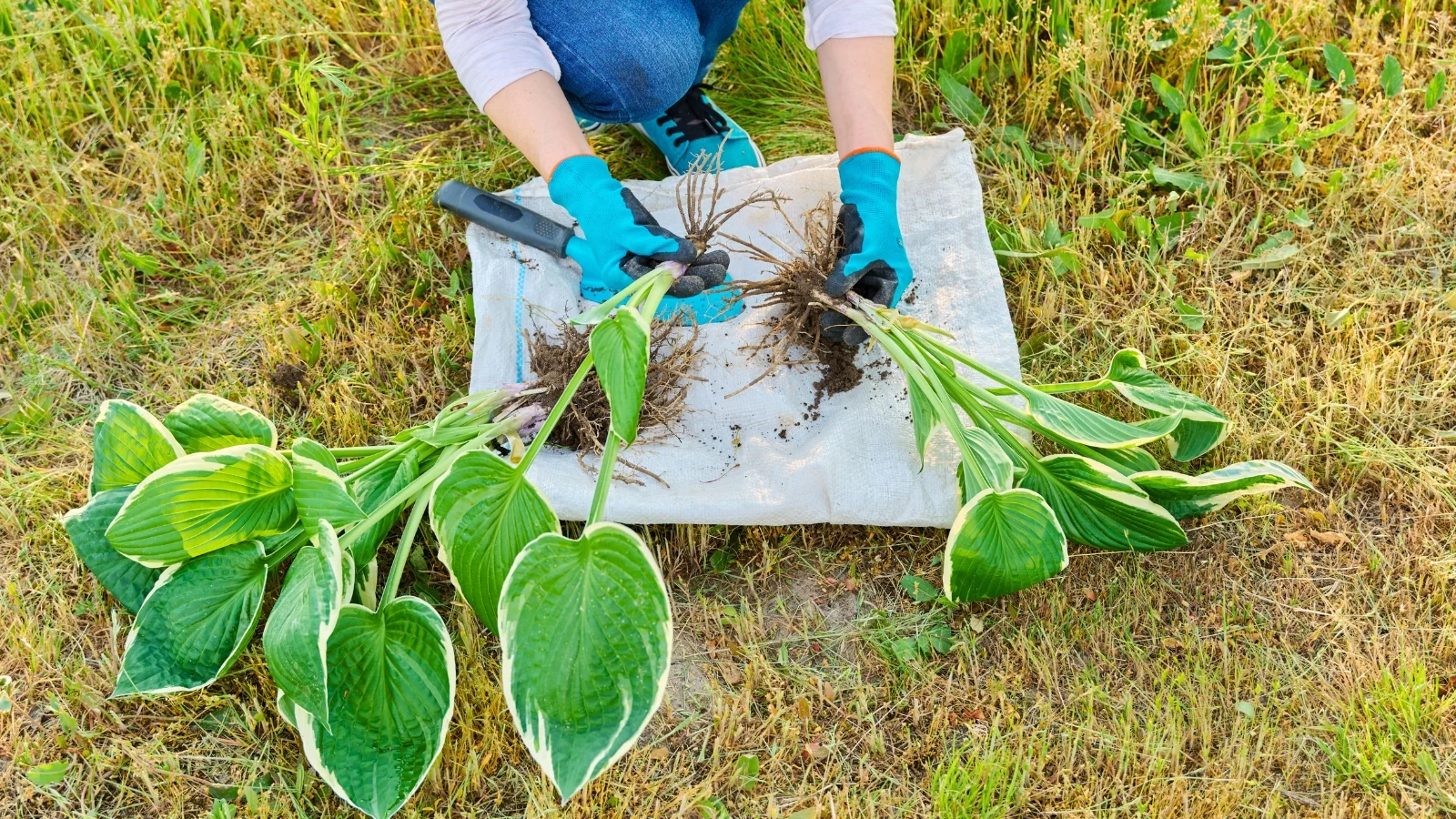
Daylilies are perhaps the most forgiving perennial to divide and one of the most rewarding — a crowded clump that has stopped blooming freely will surprise you with renewed vigor after division. Hostas divide cleanly in early spring when the nose-like shoots are just emerging, and the divisions establish quickly in our coastal conditions with consistent moisture. Coneflowers, black-eyed Susans, and ornamental grasses all benefit from division every three to four years to maintain vigor and a tidy profile in the border.
Astilbe, phlox, and Shasta daisies are also reliable candidates for regular splitting. Phlox in particular benefits from thinning and division every few years to improve airflow and reduce the powdery mildew that is so common in humid coastal gardens like those throughout Rye and the surrounding Seacoast towns.
Perennials to Leave Alone
Not every perennial wants to be divided, and pushing the wrong plant into this process can set it back significantly. Baptisia, hellebore, dictamnus, and Japanese anemone are all deep-rooted perennials that resent disturbance and may take years to recover from division. Peonies can be divided, but they should be approached carefully and only when truly necessary — ideally in early fall — since they are notoriously slow to rebloom after being moved. When in doubt, leave it alone and focus your energy on the plants that genuinely need attention.
How to Divide Well
Use a sharp spade or garden fork to lift the entire clump cleanly, working from the outer edge inward. Shake or rinse off excess soil so you can see the crown structure clearly, then divide into sections that each have three to five healthy shoots and a good mass of roots attached. Replant divisions at the same depth they were growing, water deeply, and apply a two-inch layer of mulch to retain moisture and buffer soil temperature — especially important as we move into the variable shoulder seasons on the Seacoast.
Let Seacoast Gardener Handle the Hard Work
Dividing perennials looks straightforward, but doing it correctly — at the right time, with the right technique, and without disrupting the plants around them — takes practiced hands. Seacoast Gardener provides expert perennial care throughout Rye and the greater New Hampshire Seacoast, from spring and fall division to full bed renovation and replanting. If your borders are looking crowded, tired, or off their bloom, reach out and let us take a look — sometimes the most generous thing you can do for a plant is give it room to begin again.
Call us today at (603) 770-5072 to schedule your perennial care visit and keep your garden looking its best through every season.